
 +44 7459 302492
 training@uplatz.com





( 10 Students )


Carbon Language
Master Ollama to run, manage, and integrate large language models (LLMs) locally for AI-powered applications. Price Match Guarantee
Full Lifetime Access
Access on any Device
Technical Support
Secure Checkout
Course Completion Certificate
Price Match Guarantee
Full Lifetime Access
Access on any Device
Technical Support
Secure Checkout
Course Completion Certificate
 97% Started a new career
BUY THIS COURSE (
97% Started a new career
BUY THIS COURSE (GBP 10 GBP 29 )-
 86% Got a pay increase and promotion
Students also bought -
-
- LangChain
- 10 Hours
- GBP 10
- 10 Learners
-
- Semantic Kernel
- 10 Hours
- GBP 10
- 10 Learners
-
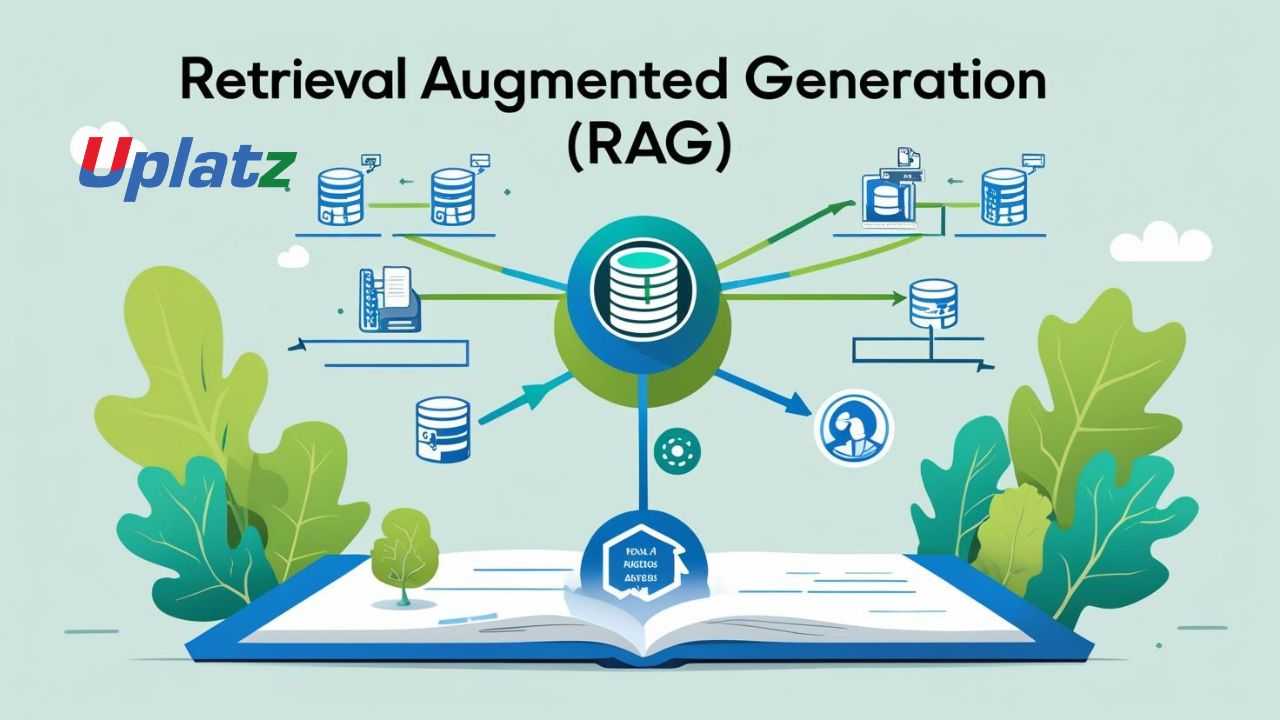
- Retrieval-Augmented Generation (RAG)
- 10 Hours
- GBP 10
- 10 Learners
About the Course – Mastering Ollama: Run, Customize & Deploy Local LLMs
Ollama is an open-source platform that empowers developers to run, manage, and customize large language models (LLMs) directly on their local machines. It offers a lightweight, private, and developer-friendly workflow that eliminates dependence on third-party cloud services. By simplifying access to advanced AI models like LLaMA, Mistral, and other open-source LLMs, Ollama bridges the gap between powerful generative AI and accessible on-device deployment.
The Mastering Ollama – Self-Paced Online Course by Uplatz provides a complete, practical pathway for learning how to install, manage, fine-tune, and integrate LLMs into real-world applications. You’ll gain hands-on experience running large models locally, connecting them with APIs and front-end apps, and deploying privacy-focused AI systems that operate fully within your control.
🔍 What is Ollama?
Ollama is a local AI runtime designed for developers who want the performance of cloud-scale models without sending sensitive data off-premise. It allows you to download and serve LLMs locally, control memory usage, and customize model parameters for specific tasks such as chatbots, summarizers, or knowledge assistants.
Unlike hosted APIs, Ollama provides:
-
Local Execution: Models run entirely on your system’s GPU or CPU.
-
Model Management: Pull, tag, and switch between models easily.
-
Customization: Adjust prompt templates, system messages, and fine-tuning options.
-
Integration Simplicity: REST and CLI tools for embedding models into apps, scripts, and pipelines.
This makes Ollama the go-to tool for developers and researchers who need performance, privacy, and flexibility in AI development.
⚙️ How Ollama Works
At its core, Ollama acts as a model orchestrator that manages the entire lifecycle of local LLMs. It packages models using a declarative Modelfile format that defines parameters such as architecture, tokenizer, and quantization level.
Here’s what happens under the hood:
-
Installation & Setup: Ollama installs a small daemon that manages local model processes.
-
Model Pulling: Use
ollama pullto fetch models like LLaMA 2, Mistral, or Vicuna from repositories. -
Serving Models: Run
ollama run model-nameto start a local endpoint for chat or inference. -
Fine-Tuning & Prompts: Customize model behavior with Modelfiles or prompt engineering.
-
Integration: Use HTTP APIs or JavaScript/Python SDKs to embed LLMs into apps or workflows.
-
Embeddings & Vector Databases: Generate embeddings for semantic search using Milvus, Pinecone, or Weaviate integrations.
By handling these steps locally, developers retain full control over performance, latency, and data security — making Ollama ideal for confidential and on-premise AI deployments.
🏭 How Ollama is Used in the Industry
Ollama is rapidly gaining adoption among AI startups, research institutions, and enterprise teams seeking secure, offline LLM workflows. Its ability to host open-source models locally enables several real-world applications:
-
Enterprise AI Chatbots: Run internal knowledge bots without exposing data to cloud APIs.
-
AI-Assisted Coding: Integrate Ollama with VS Code or Jupyter for on-device coding assistants.
-
Edge and IoT AI: Deploy lightweight models directly on edge devices for real-time responses.
-
Research & Experimentation: Test custom fine-tuning methods or quantization schemes.
-
Privacy-Focused Applications: Ensure sensitive data never leaves local infrastructure.
Organizations in healthcare, finance, education, and defense sectors are exploring Ollama-based private LLM solutions to achieve regulatory compliance while leveraging state-of-the-art AI capabilities.
🌟 Benefits of Learning Ollama
Mastering Ollama equips developers with practical skills to operate and customize LLMs independently of proprietary cloud platforms.
Key advantages include:
-
Data Privacy & Security: Run AI models locally — no cloud exposure.
-
Full Control: Customize prompt behavior, memory, and system settings.
-
Cost Efficiency: Avoid recurring API fees and network latency.
-
Multi-Model Support: Switch instantly between LLaMA, Mistral, Falcon, and others.
-
Offline Capability: Develop AI apps in restricted or low-connectivity environments.
-
Developer Experience: Simple CLI and REST interfaces integrate easily with any stack.
-
Open-Source Ecosystem: Benefit from community models, updates, and shared templates.
By learning Ollama, you’ll gain the confidence to build, deploy, and scale LLM-powered applications on your own infrastructure.
📘 What You’ll Learn in This Course
This self-paced program takes a practical, step-by-step approach to mastering Ollama and integrating LLMs into real projects.
You’ll learn to:
-
Understand Ollama’s architecture and workflow.
-
Install and run open-source models locally.
-
Manage multiple models and fine-tune them for specific tasks.
-
Serve models through local APIs and chat interfaces.
-
Integrate Ollama with web apps and automation tools.
-
Explore embeddings and vector databases for semantic search.
-
Build and deploy AI apps that run securely and privately.
-
Optimize inference performance and GPU usage.
Each module includes HD video tutorials, hands-on examples, and mini-projects to help you apply concepts in real scenarios.
🧠 How to Use This Course Effectively
-
Begin with Setup: Install Ollama and run your first model.
-
Experiment with Models: Try LLaMA, Mistral, and open community variants.
-
Integrate Practically: Connect Ollama with REST APIs, scripts, and chat interfaces.
-
Work on Projects: Follow the guided mini-projects to apply concepts.
-
Engage with the Community: Join Ollama’s open-source forums for new model releases.
-
Advance Gradually: Revisit modules on fine-tuning and embedding as you scale.
-
Build Your Capstone: Create a custom chatbot or automation app as your final project.
👩💻 Who Should Take This Course
This course is designed for:
-
AI Developers experimenting with open-source LLMs.
-
Software Engineers building AI-driven applications.
-
Researchers & Students studying language model behavior.
-
Startups & Enterprises seeking private or on-prem AI deployments.
-
Tech Enthusiasts running LLMs on local hardware or edge devices.
No prior AI operations experience is required — the course starts from installation and gradually progresses to advanced model management and integration.
🧩 Course Format and Certification
This Uplatz course is fully self-paced and includes:
-
HD video lectures and screen-recorded tutorials.
-
Downloadable scripts, modelfiles, and examples.
-
Hands-on assignments and integration projects.
-
Quizzes and knowledge checkpoints.
-
Lifetime access with future updates as Ollama evolves.
On completion, you’ll earn a Course Completion Certificate from Uplatz, demonstrating your ability to run, manage, and integrate LLMs using Ollama in production environments.
🚀 Why This Course Stands Out
-
Cutting-Edge Curriculum: Covers Ollama and the latest open-source LLMs.
-
Hands-On Experience: Focuses on building real AI tools, not just theory.
-
Privacy-Focused Training: Learn to deploy LLMs locally without cloud dependency.
-
Developer Centric: APIs, CLI commands, and workflow automation included.
-
Career Boost: Gain in-demand skills in local AI operations and deployment.
By the end, you’ll know how to fine-tune models, create embeddings, and serve AI applications safely on your own infrastructure — skills highly sought after in the AI industry.
🌐 Final Takeaway
As AI development moves toward privacy, efficiency, and customization, Ollama emerges as a pioneering solution for running and personalizing LLMs locally. It offers developers freedom to experiment without relying on external APIs or expensive cloud services.
The Mastering Ollama – Self-Paced Course by Uplatz empowers you to master the tools, commands, and deployment strategies needed to build local, secure, and scalable AI applications. Whether you’re building a custom assistant, fine-tuning models for research, or creating AI systems that operate privately on your own hardware, this course is your gateway to hands-on LLM operations and AI self-hosting.
Start today and learn how to bring the power of LLMs to your local environment with Ollama.
By completing this course, learners will:
-
Run LLMs locally using Ollama CLI and API.
-
Manage multiple models and configurations.
-
Build applications with Ollama + Python/Node.js integrations.
-
Use embeddings and vector search for contextual AI.
-
Fine-tune or customize models for specific tasks.
-
Deploy AI apps that balance performance, cost, and privacy.
Course Syllabus
Module 1: Introduction to Ollama
-
What is Ollama and why use it?
-
Ollama vs cloud-based LLM APIs
-
Installing Ollama on macOS, Linux, and Windows
Module 2: Running Models Locally
-
Downloading and running pre-trained models
-
Switching between models (LLaMA, Mistral, etc.)
-
Configuring model settings
Module 3: Ollama CLI & API
-
Using the Ollama command-line interface
-
Exposing Ollama as a local API
-
Basic prompt and response workflows
Module 4: Customizing Models
-
Fine-tuning basics
-
Model configuration files
-
Importing and modifying model weights
Module 5: Embeddings & Context
-
Generating embeddings with Ollama
-
Using embeddings with vector databases (Pinecone, Weaviate, Milvus)
-
Context-aware AI workflows
Module 6: Integration with Applications
-
Python and Node.js SDKs
-
Connecting Ollama to web apps (Next.js, Flask, etc.)
-
Automation with scripts and APIs
Module 7: Advanced Use Cases
-
Running Ollama in Docker containers
-
Using GPUs for faster inference
-
Scaling Ollama across multiple machines
Module 8: Real-World Projects
-
Local AI chatbot with Ollama
-
Document Q&A system with embeddings
-
Code assistant powered by Ollama models
Module 9: Deployment & Security
-
Private/local AI deployments
-
Security best practices for sensitive data
-
Balancing performance vs. hardware limits
Module 10: Best Practices & Future Trends
-
Staying updated with new model releases
-
Open-source LLM ecosystem overview
-
Optimizing Ollama for production apps
Learners will receive a Certificate of Completion from Uplatz, validating their expertise in Ollama and local LLM integration. This certificate demonstrates readiness for roles in AI engineering, full-stack development, and applied machine learning.
Ollama skills prepare learners for roles such as:
-
AI Engineer (Local AI Applications)
-
Full-Stack Developer (AI-integrated apps)
-
Machine Learning Engineer
-
Research Engineer (LLM fine-tuning)
-
DevOps/Infra Engineer (AI deployment)
With rising demand for private, cost-effective AI solutions, Ollama expertise is highly relevant in enterprises, research, and startups.
-
What is Ollama?
Ollama is an open-source platform for running LLMs locally, enabling private and customizable AI applications. -
Which models can Ollama run?
Ollama supports LLaMA, Mistral, and other open-source LLMs. -
What’s the advantage of Ollama over cloud APIs?
Ollama allows local, private, and cost-free execution, without dependency on external servers. -
How does Ollama expose models for use?
Via CLI commands and a local REST API. -
Can Ollama be fine-tuned?
Yes, Ollama allows custom configurations and fine-tuning of models. -
What are embeddings in Ollama?
Embeddings are vector representations of text, useful for semantic search, Q&A, and context injection. -
How does Ollama integrate with apps?
Through Python, Node.js SDKs, and API endpoints. -
Does Ollama require a GPU?
Not necessarily; it can run on CPU, but GPUs improve inference speed. -
What are real-world use cases of Ollama?
Chatbots, document search, code assistants, local Q&A systems, and personal AI apps. -
How does Ollama compare to LangChain or Semantic Kernel?
Ollama focuses on running and managing models locally, while LangChain and SK focus on orchestration and chaining of LLM functions.