
 +44 7459 302492
 training@uplatz.com





( 10 Students )


Computer Vision for Robotics
Master computer vision techniques for robotic perception, object recognition, navigation, and manipulation using cameras, depth sensors, and AI-driven Price Match Guarantee
Full Lifetime Access
Access on any Device
Technical Support
Secure Checkout
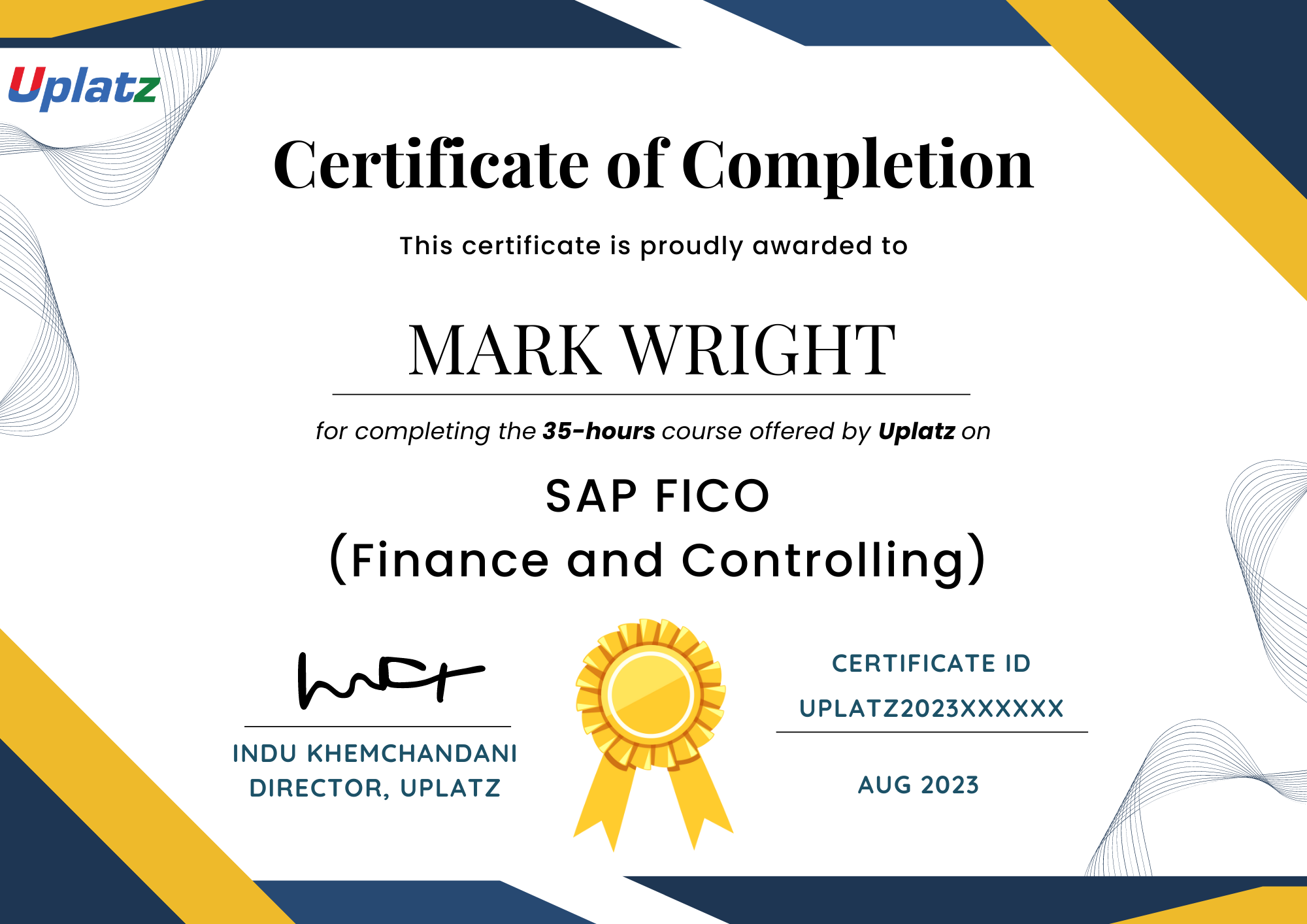
Course Completion Certificate
Price Match Guarantee
Full Lifetime Access
Access on any Device
Technical Support
Secure Checkout
Course Completion Certificate
 97% Started a new career
BUY THIS COURSE (
97% Started a new career
BUY THIS COURSE (GBP 10 GBP 29 )-
 86% Got a pay increase and promotion
Students also bought -
-
- Deep Learning with TensorFlow
- 50 Hours
- GBP 10
- 333 Learners
-
- Autonomous Edge Systems
- 10 Hours
- GBP 10
- 10 Learners
-
- SuperAgent: Building Autonomous AI Agents
- 10 Hours
- GBP 10
- 10 Learners
-
Object detection and recognition
-
Visual tracking and motion estimation
-
Depth estimation and 3D reconstruction
-
Visual odometry and SLAM (Simultaneous Localization and Mapping)
-
Scene understanding and semantic segmentation
-
Navigation and path planning
-
Obstacle detection and avoidance
-
Visual servoing for manipulation
-
Grasp detection and pose estimation
-
Human–robot interaction and safety
-
Image acquisition and preprocessing
-
Feature extraction and recognition
-
Depth and 3D perception
-
Motion estimation and tracking
-
Scene understanding
-
Integration with robotic control systems
-
Ability to build perception-driven robotic systems
-
Strong foundation in autonomous navigation and manipulation
-
Skills applicable to AI, robotics, and embedded systems
-
High demand across industry and research
-
Understanding of real-time and safety-critical vision systems
-
Camera models and calibration
-
Image processing with OpenCV
-
Object detection and tracking for robots
-
Depth estimation and stereo vision
-
Visual odometry and SLAM
-
Deep learning for robotic perception
-
Vision-based navigation and manipulation
-
Integrating vision with ROS/ROS2
-
Designing end-to-end robotic perception pipelines
-
Start with vision fundamentals and camera geometry
-
Practice image processing and feature detection
-
Build simple perception pipelines
-
Progress to deep-learning-based vision models
-
Integrate vision outputs with robot motion
-
Complete the capstone: a vision-enabled robotic system
-
Robotics Engineers
-
Computer Vision Engineers
-
Machine Learning Engineers
-
Autonomous Systems Developers
-
Mechatronics Engineers
-
AI Researchers
-
Students entering robotics and AI
By the end of this course, learners will:
-
Understand vision fundamentals for robotics
-
Implement object detection and tracking systems
-
Perform depth estimation and 3D perception
-
Build visual odometry and SLAM pipelines
-
Integrate vision with robot navigation and control
-
Apply deep learning models to robotic perception
-
Design robust real-world vision systems
Course Syllabus
Module 1: Introduction to Robotics Vision
-
Role of vision in robotics
-
Sensors and perception pipelines
Module 2: Camera Models & Calibration
-
Pinhole model
-
Distortion correction
Module 3: Image Processing Fundamentals
-
Filtering, edges, features
Module 4: Object Detection & Tracking
-
Classical and deep-learning methods
Module 5: Depth & 3D Vision
-
Stereo vision
-
RGB-D sensors
Module 6: Visual Odometry & SLAM
-
Motion estimation
-
Mapping techniques
Module 7: Deep Learning for Robotic Vision
-
CNNs and vision transformers
Module 8: Vision-Based Navigation
-
Obstacle avoidance
-
Path planning
Module 9: Vision for Manipulation
-
Pose estimation
-
Grasp detection
Module 10: ROS Integration
-
Vision nodes
-
Sensor fusion
Module 11: Real-World Challenges
-
Latency, noise, robustness
Module 12: Capstone Project
-
Build a vision-enabled robotic system
Learners receive a Uplatz Certificate in Computer Vision for Robotics, validating expertise in robotic perception, navigation, and vision-based autonomy.
This course prepares learners for roles such as:
-
Robotics Engineer
-
Computer Vision Engineer
-
Autonomous Systems Engineer
-
AI Engineer (Robotics)
-
Perception Engineer
-
Research Engineer (Robotics & Vision)
1. What is computer vision in robotics?
The use of visual data to enable robots to perceive and understand their environment.
2. What sensors are used for robotic vision?
Cameras, stereo cameras, RGB-D sensors, LiDAR, and event cameras.
3. What is visual SLAM?
Simultaneous localization and mapping using visual data.
4. Why is camera calibration important?
To accurately map image coordinates to real-world coordinates.
5. What role does deep learning play in robotic vision?
It enables robust object detection, segmentation, and scene understanding.
6. What is visual odometry?
Estimating robot motion using consecutive camera frames.
7. What is vision-based navigation?
Using visual perception to guide robot movement.
8. What frameworks are used for robotic vision?
OpenCV, ROS/ROS2, PyTorch, TensorFlow.
9. What is sensor fusion?
Combining data from multiple sensors to improve perception accuracy.
10. What are key challenges in robotic vision?
Lighting changes, noise, occlusion, latency, and real-time constraints.