
 +44 7459 302492
 training@uplatz.com





( 10 Students )


Multi-Agent AI Systems
Learn how to design, coordinate, and deploy multi-agent AI systems using LLM-based agents, planning, communication protocols, and real-world orchestra Price Match Guarantee
Full Lifetime Access
Access on any Device
Technical Support
Secure Checkout
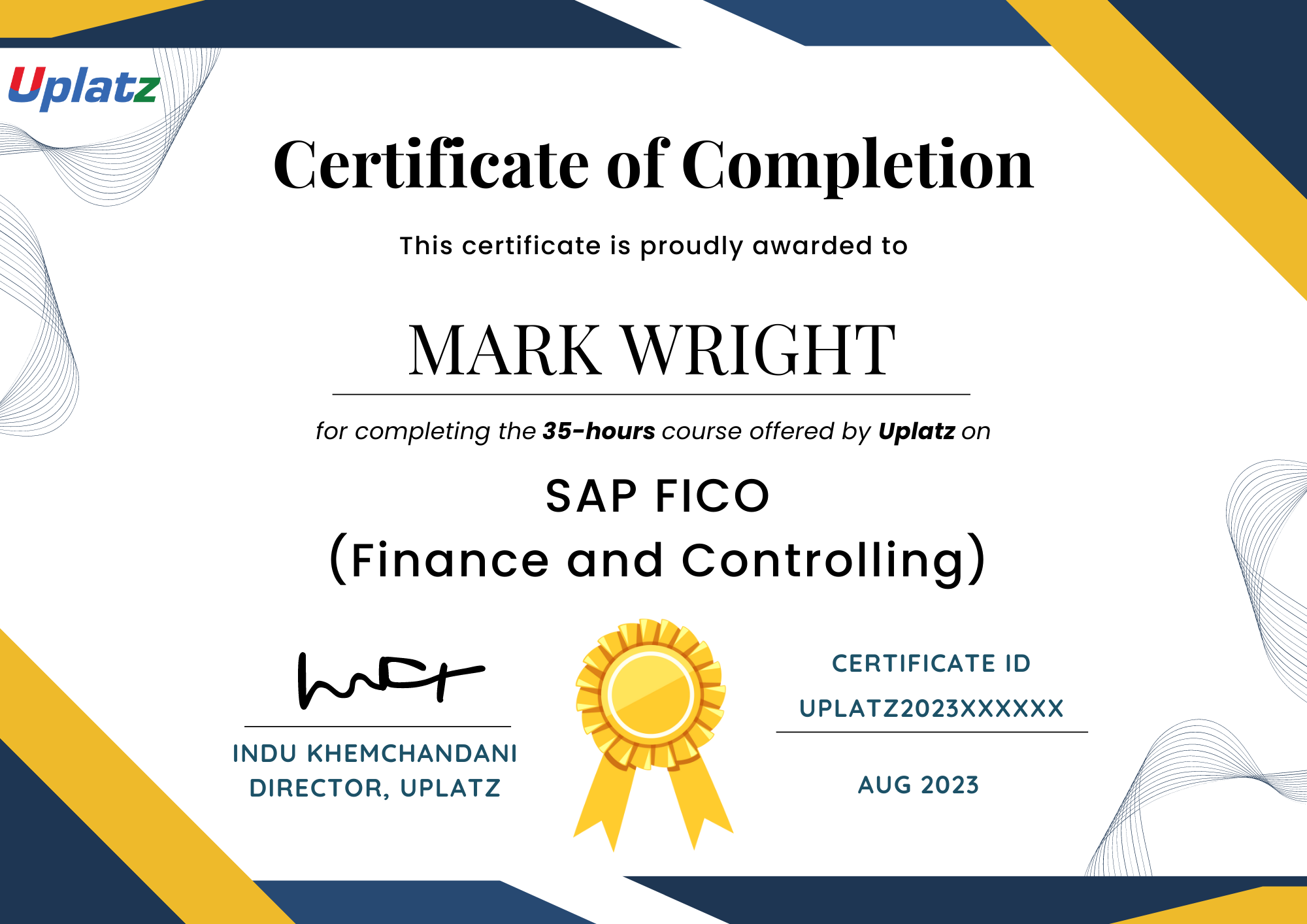
Course Completion Certificate
Price Match Guarantee
Full Lifetime Access
Access on any Device
Technical Support
Secure Checkout
Course Completion Certificate
 97% Started a new career
BUY THIS COURSE (
97% Started a new career
BUY THIS COURSE (GBP 10 GBP 29 )-
 87% Got a pay increase and promotion
Students also bought -
-
- Transformers
- 10 Hours
- GBP 10
- 10 Learners
-
- PEFT
- 10 Hours
- GBP 10
- 10 Learners
-
- Fine-Tuning Techniques – Full Fine-Tuning, LoRA & QLoRA
- 10 Hours
- GBP 10
- 10 Learners
-
Perceive information
-
Make decisions independently
-
Communicate with other agents
-
Execute actions or tools
-
Adapt behavior based on feedback
-
Cooperative (working toward a shared goal)
-
Competitive (optimizing individual rewards)
-
Hierarchical (manager–worker structures)
-
Decentralized (peer-to-peer collaboration)
-
A reasoning core (LLM)
-
Short-term and long-term memory
-
Tool access (APIs, code execution, databases)
-
A role definition or persona
-
Goal or task specification
-
Natural language messages
-
Structured protocols
-
Shared memory spaces
-
Event-driven signaling
-
Goal decomposition
-
Task allocation
-
Role-based planning
-
Chain-of-thought and plan-and-execute patterns
-
Central orchestrators
-
Supervisor agents
-
Voting and consensus mechanisms
-
Conflict resolution strategies
-
Hallucination containment
-
Agent alignment
-
Permission boundaries
-
Monitoring and auditability
-
Advanced AI system design skills
-
Ability to build scalable, modular AI applications
-
Expertise in agent coordination and planning
-
Practical experience with LLM-powered agents
-
Strong foundation for autonomous AI development
-
High-demand skills for next-generation AI roles
-
Foundations of multi-agent systems
-
Agent roles, memory, and tools
-
LLM-based agent design
-
Communication and coordination patterns
-
Task decomposition and planning
-
Agent orchestration frameworks
-
Safety, monitoring, and governance
-
Real-world multi-agent applications
-
Capstone: build a complete multi-agent AI system
-
Start with single-agent fundamentals
-
Progress to simple multi-agent collaboration
-
Experiment with role-based agents
-
Build hierarchical and decentralized systems
-
Add safety constraints and monitoring
-
Complete the capstone project step by step
-
AI Engineers
-
LLM Developers
-
Machine Learning Engineers
-
Software Architects
-
Automation Engineers
-
Data Scientists
-
Researchers and advanced AI students
By the end of this course, learners will:
-
Understand multi-agent system principles
-
Design autonomous AI agents with roles and goals
-
Implement agent communication and coordination
-
Build hierarchical and cooperative agent systems
-
Integrate tools, memory, and planning
-
Deploy multi-agent AI applications safely
-
Evaluate and monitor agent performance
Course Syllabus
Module 1: Introduction to Multi-Agent AI
-
History and motivation
-
Single-agent vs multi-agent systems
Module 2: Agent Design
-
Roles, memory, tools
-
LLM-based reasoning
Module 3: Communication & Coordination
-
Messaging patterns
-
Shared memory
Module 4: Planning & Task Decomposition
-
Goal hierarchies
-
Plan-and-execute
Module 5: Orchestration Patterns
-
Supervisor agents
-
Manager–worker models
Module 6: Safety & Governance
-
Permissions
-
Alignment and control
Module 7: Frameworks & Tooling
-
LangChain agents
-
AutoGen
-
CrewAI
-
Semantic Kernel
Module 8: Real-World Applications
-
Business automation
-
Research assistants
Module 9: Deployment & Monitoring
-
APIs and services
-
Logging and observability
Module 10: Capstone Project
-
Build a complete multi-agent AI system
Learners receive a Uplatz Certificate in Multi-Agent AI Systems, validating their skills in collaborative AI architecture, agent orchestration, and intelligent system design.
This course prepares learners for roles such as:
-
AI Engineer
-
LLM Engineer
-
Autonomous Systems Engineer
-
AI Architect
-
Applied AI Researcher
-
Automation Engineer
-
GenAI Product Developer
1. What is a multi-agent AI system?
A system composed of multiple autonomous AI agents that interact and collaborate.
2. How do agents communicate?
Through messages, shared memory, or coordination protocols.
3. What role do LLMs play in agents?
They act as the reasoning and decision-making core.
4. What is a supervisor agent?
An agent that coordinates or manages other agents.
5. Why use multi-agent systems?
To solve complex problems that require collaboration and specialization.
6. What are common risks?
Hallucinations, misalignment, coordination failures.
7. How are tasks distributed?
Through planning, role assignment, or dynamic delegation.
8. What frameworks support multi-agent AI?
LangChain, AutoGen, CrewAI, Semantic Kernel.
9. Are multi-agent systems deterministic?
No, they are often probabilistic and adaptive.
10. Where are multi-agent systems used?
Automation, research, robotics, finance, and enterprise AI.