
 +44 7459 302492
 training@uplatz.com





( 10 Students )


Oracle Financials Cloud
Master Oracle Financials Cloud modules including General Ledger, Accounts Payable, Accounts Receivable, Assets, Cash Management, and Financial Reporti Price Match Guarantee
Full Lifetime Access
Access on any Device
Technical Support
Secure Checkout
Course Completion Certificate
Price Match Guarantee
Full Lifetime Access
Access on any Device
Technical Support
Secure Checkout
Course Completion Certificate
 97% Started a new career
BUY THIS COURSE (
97% Started a new career
BUY THIS COURSE (GBP 10 GBP 29 )-
 86% Got a pay increase and promotion
Students also bought -
-
- Oracle Cloud Infrastructure (OCI)
- 10 Hours
- GBP 10
- 10 Learners
-

- Oracle APEX
- 5 Hours
- GBP 10
- 469 Learners
-
- Oracle APEX Administration
- 2 Hours
- GBP 10
- 42 Learners
Oracle Financials Cloud is a cloud-native financial management solution within Oracle Cloud ERP that supports core accounting and finance operations. It includes tightly integrated modules that cover the full financial lifecycle, including:
-
General Ledger (GL)
-
Accounts Payable (AP)
-
Accounts Receivable (AR)
-
Cash Management (CM)
-
Fixed Assets (FA)
-
Expense Management
-
Intercompany Accounting
-
Financial Reporting and Analytics
-
Chart of Accounts (COA) design
-
Accounting calendars and ledgers
-
Journal processing and posting
-
Multi-currency accounting
-
Budgetary control
-
Period close management
-
Configurable accounting rules
-
Compliance with IFRS and GAAP
-
Auditability and traceability
-
Invoice processing and validation
-
Payment scheduling and execution
-
Withholding tax handling
-
Supplier management
-
Integration with procurement
-
Invoice generation
-
Receipts and adjustments
-
Credit management
-
Revenue recognition support
-
Integration with Order Management
-
Bank statement reconciliation
-
Cash forecasting
-
Bank account management
-
Asset capitalization
-
Depreciation methods
-
Asset transfers and retirements
-
Compliance reporting
-
Financial Reporting Studio (FRS)
-
OTBI (Oracle Transactional Business Intelligence)
-
Smart View for Excel
-
Strong understanding of enterprise financial processes
-
Cloud ERP skills aligned with global industry demand
-
Practical knowledge of accounting flows and controls
-
Experience with real-time financial reporting
-
Skills applicable across multiple industries
-
Career opportunities in ERP consulting and finance transformation
-
Oracle Financials Cloud architecture
-
Core financial modules and business flows
-
Chart of Accounts design and setup
-
Sub-ledger accounting configuration
-
Period close and reconciliation processes
-
Financial reporting and analytics
-
Security, roles, and controls
-
Integration with other Oracle Cloud modules
-
Best practices for finance operations
-
Start with core financial concepts and ERP fundamentals
-
Understand end-to-end accounting flows
-
Practice module-level scenarios
-
Focus on reporting and reconciliation
-
Review real-world use cases
-
Complete the capstone project
-
Finance Professionals
-
Accountants and Auditors
-
ERP Consultants
-
Oracle Functional Consultants
-
Business Analysts
-
Graduates entering ERP careers
By the end of this course, learners will:
-
Understand Oracle Financials Cloud architecture
-
Configure and use core financial modules
-
Manage end-to-end accounting processes
-
Perform financial close and reconciliation
-
Generate financial and management reports
-
Support compliance and audit requirements
-
Work confidently in Oracle Cloud ERP environments
Course Syllabus
Module 1: Introduction to Oracle Financials Cloud
-
Oracle Cloud ERP overview
-
Financials Cloud positioning
Module 2: Enterprise Structures & COA
-
Business units
-
Ledgers
-
Chart of Accounts
Module 3: General Ledger
-
Journals
-
Period close
-
Revaluation and translation
Module 4: Sub-Ledger Accounting
-
Accounting rules
-
Audit trails
Module 5: Accounts Payable
-
Invoice processing
-
Payments
-
Taxes
Module 6: Accounts Receivable
-
Billing
-
Receipts
-
Adjustments
Module 7: Cash Management
-
Bank reconciliation
-
Cash forecasting
Module 8: Fixed Assets
-
Asset lifecycle
-
Depreciation
Module 9: Financial Reporting
-
FRS
-
OTBI
-
Smart View
Module 10: Security & Controls
-
Roles
-
Data access
Module 11: Period Close & Compliance
-
Month-end and year-end close
Module 12: Capstone Project
-
End-to-end financial process simulation
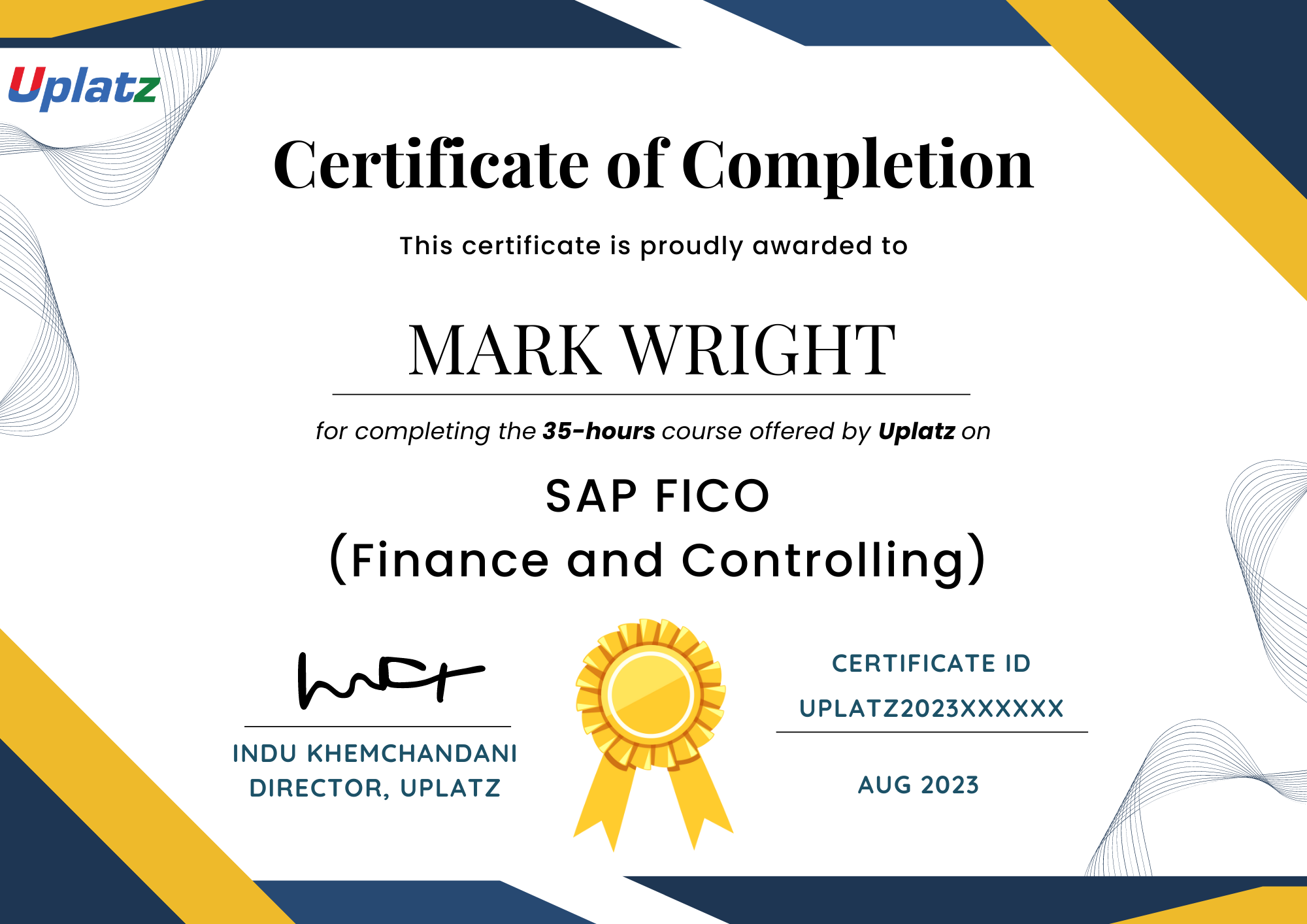
Learners receive a Uplatz Certificate in Oracle Financials Cloud, validating expertise in cloud-based financial management and ERP finance processes.
This course prepares learners for roles such as:
-
Oracle Financials Functional Consultant
-
ERP Finance Consultant
-
Financial Systems Analyst
-
Accounting Systems Specialist
-
Oracle Cloud ERP Analyst
-
Finance Transformation Consultant
1. What is Oracle Financials Cloud?
A cloud-based financial management solution within Oracle Cloud ERP.
2. What modules are part of Oracle Financials Cloud?
GL, AP, AR, Cash Management, Fixed Assets, and Financial Reporting.
3. What is Sub-Ledger Accounting?
A rules-based engine that generates accounting entries from sub-modules.
4. What is a Chart of Accounts?
A structured framework to classify financial transactions.
5. How does Oracle Financials Cloud support compliance?
Through audit trails, standardized accounting rules, and reporting.
6. What reporting tools are available?
Financial Reporting Studio, OTBI, and Smart View.
7. Is Oracle Financials Cloud multi-currency?
Yes, it supports global, multi-currency operations.
8. How are AP and AR integrated with GL?
Through automated sub-ledger accounting and posting.
9. What industries use Oracle Financials Cloud?
Manufacturing, finance, healthcare, public sector, retail, and education.
10. Why move from on-prem ERP to Oracle Financials Cloud?
For scalability, automation, and real-time insights.